
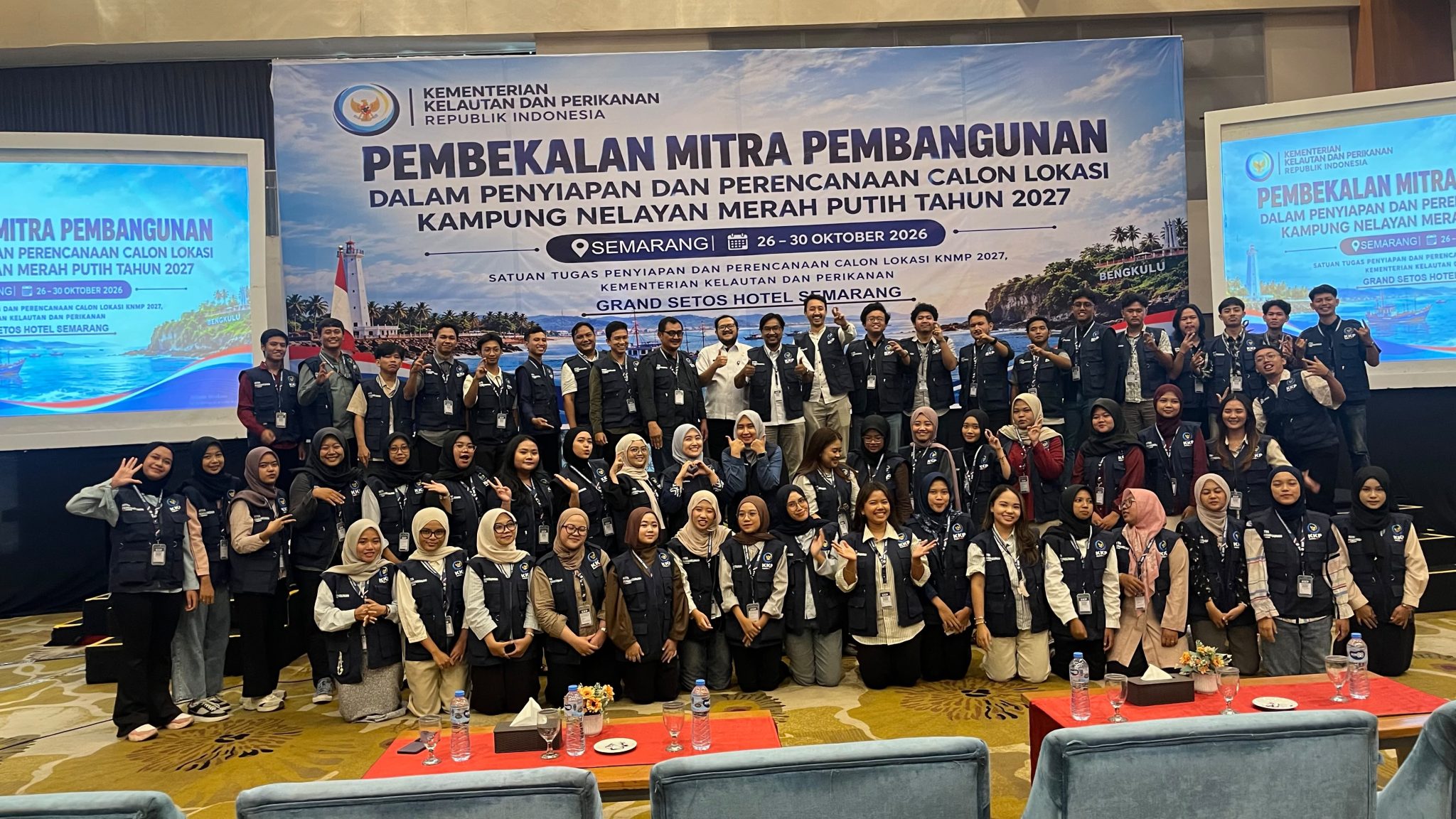
Semarang – The Faculty of Fisheries and Marine Science, Universitas Diponegoro (FPIK UNDIP), is contributing to the preparation of the 2027 Kampung Nelayan Merah Putih Program (KNMP). Through a team from Universitas Diponegoro (UNDIP), the initiative covers the preparation and assessment of 58 proposed sites across six regencies and cities.
The six areas include Jepara Regency, Demak Regency, Semarang City, Kendal Regency, Pekalongan City, and Wonogiri Regency. UNDIP’s involvement is part of its collaboration with the Ministry of Marine Affairs and Fisheries (KKP). This collaboration aims to support productive and sustainable coastal development.
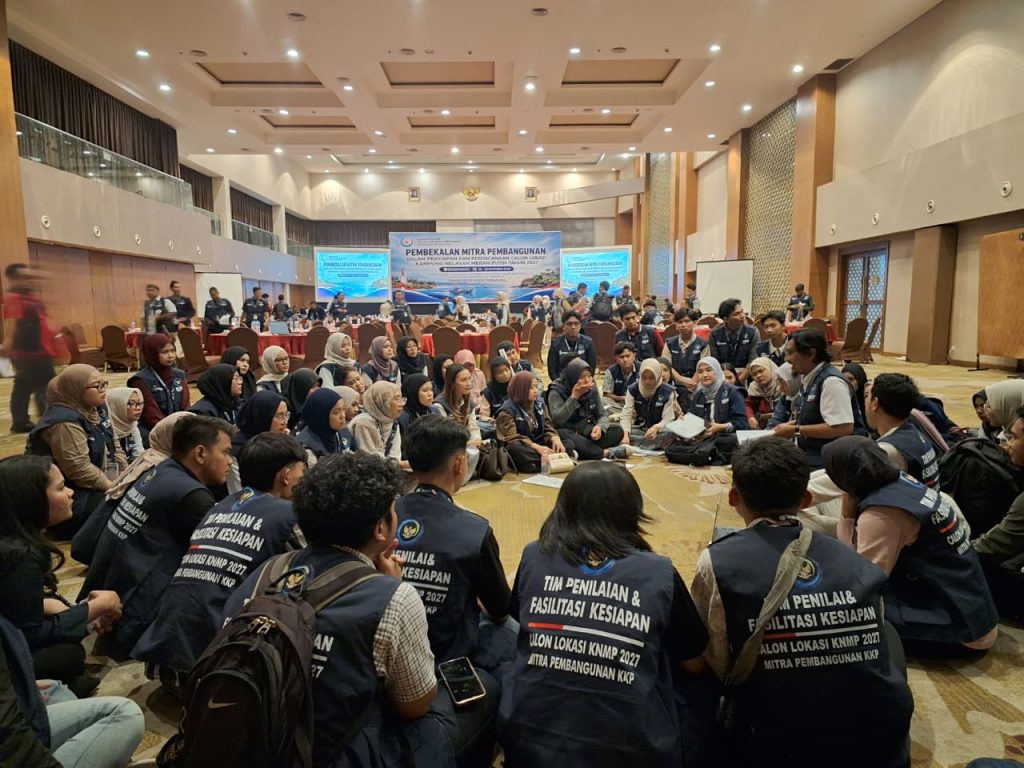
As an initial step, the UNDIP team participated in a technical briefing for development partners. The program focused on the preparation and planning of proposed sites for the 2027 KNMP initiative. The event took place from October 26 to 30, 2026, at Grand Setos Hotel, Semarang. The briefing was held simultaneously in several regions across Indonesia. The Director General of Capture Fisheries, KKP, officially opened the program.
The briefing aimed to provide participants with a shared understanding of site identification, field surveys, assessments, and site readiness. It also introduced the standards and procedures required for the preparation process.
Supporting Coastal Development Based on Local Potential
The Kampung Nelayan Merah Putih Program is a government initiative to strengthen coastal communities’ economies. It focuses not only on fisheries infrastructure but also on integrated economic development.
The program covers fisheries production, product processing, marketing, institutional development, and fisher empowerment. These efforts aim to transform fishing villages into productive and sustainable economic centers.
During the preparation stage, each proposed site must undergo a comprehensive assessment. The assessment considers local needs and regional potential. Key aspects include marine and fisheries resources, site readiness, market access, and supporting infrastructure.
This assessment ensures that development plans match local conditions and community needs. Furthermore, a local potential-based approach can increase the program’s benefits for coastal communities.
UNDIP Assigns Academic Team to Prepare 58 Proposed Sites
For this initiative, UNDIP has assigned a team with expertise in fisheries and marine resource management. The team is led by Kukuh Eko Prihantoko, S.Pi., M.Si., as Manager. Hendrik Anggi Setyawan, S.Pi., M.Si., serves as Team Leader.
Six regional coordinators also support the implementation. They are Dr. Trisnani Dwi Hapsari, S.Pi., M.Si.; Sandra Mandika Wahyuningsih, S.Pi., M.Pi.; Siti Oftafia Wijayanti, S.Pi., M.Si.; Desca Estiyani Dewi, S.Pi., M.Pi.; Slamet Suharto, S.Pi., M.Si.; and Eko Susanto, S.Pi., M.Sc., Ph.D.
The involvement of UNDIP academics is expected to strengthen data collection and regional analysis. Their knowledge and experience in fisheries provide an important foundation. This expertise helps identify local potential, community needs, and challenges faced by fishing communities.
Through this contribution, UNDIP supports a more objective and measurable planning process. It also ensures that development strategies consider the characteristics of each region.
Strengthening Surveys and Assessments for the 2027 KNMP Program
The KKP briefing covered four main stages in preparing the proposed sites. These stages include site identification and preparation, surveys and assessments, site readiness facilitation, and development planning for the Kampung Nelayan Merah Putih Program.
The assessment process uses 15 indicators grouped into four main dimensions. These dimensions cover community needs, marine and fisheries potential, site readiness, and sustainability and accessibility.
Participants also received training on digital systems for field data management. These systems support documentation, coordinate recording, evidence collection, and assessment reporting. Digital tools are expected to improve data accuracy and simplify the verification process.
Following the briefing, the UNDIP team will conduct surveys, verification, assessments, and site readiness facilitation across the 58 proposed locations. The results will serve as a basis for recommendations and further planning for the 2027 KNMP program.
FPIK UNDIP’s participation reflects the university’s commitment to supporting Indonesia’s marine and fisheries development. Through collaboration with KKP, UNDIP aims to contribute to data-driven coastal development. This initiative also seeks to strengthen fishing communities’ economies and promote sustainable marine and fisheries management.