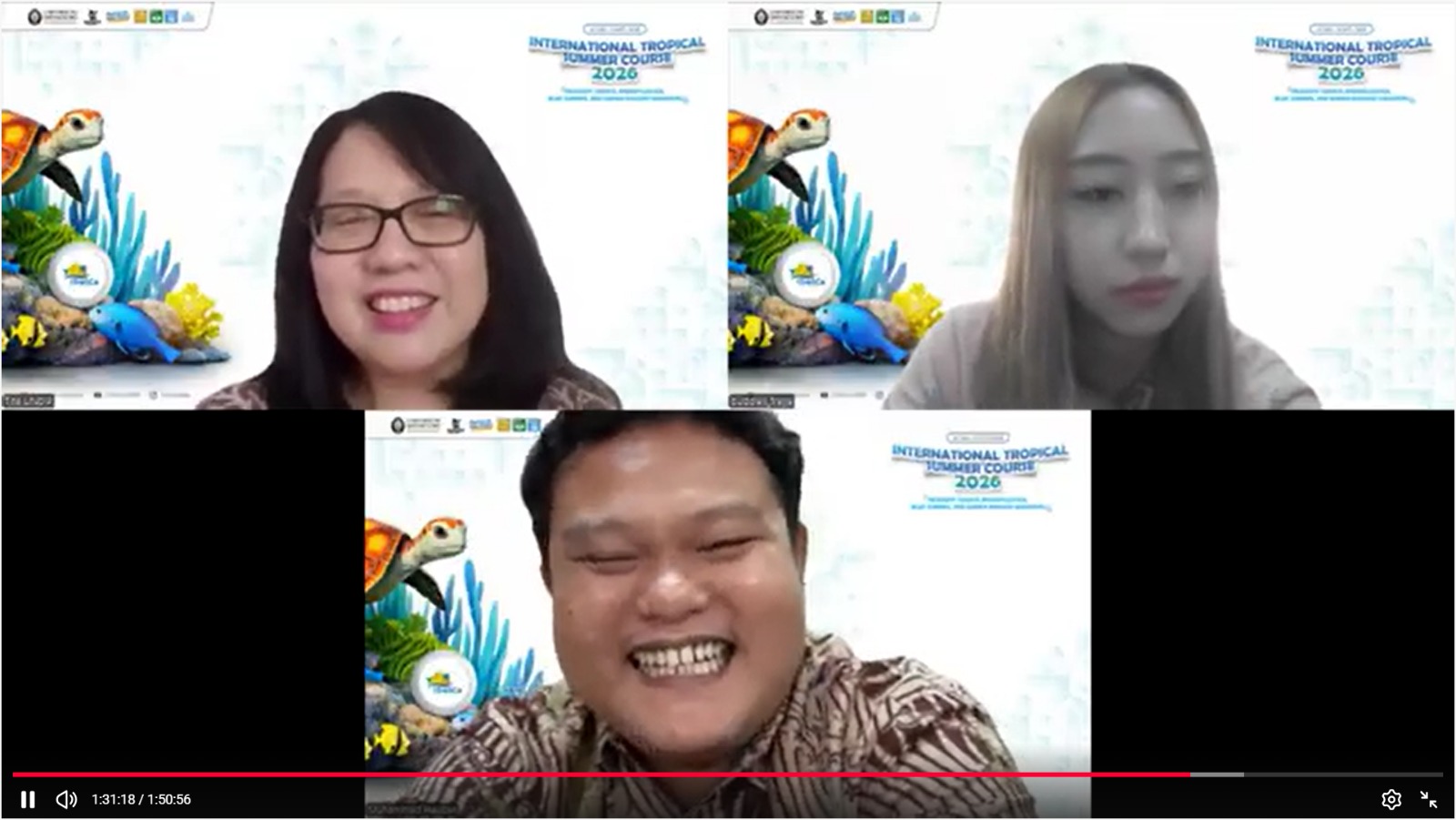
Semarang, Indonesia – The Faculty of Fisheries and Marine Sciences, Universitas Diponegoro (FPIK UNDIP), successfully held the International Tropical Summer Course (ITroSCo) 2026 from August 27 to September 9, 2026. Under the theme “Resilient Coasts: Microplastics, Blue Carbon, and Human-Induced Disasters,” the program brought together more than 50 participants from various countries.
ITroSCo 2026 provided an international learning platform for students, academics, and researchers. Through this program, participants exchanged knowledge and explored solutions to current marine and coastal challenges.
The program addressed several urgent environmental issues. These included marine pollution, microplastic contamination, climate change, and human-induced disasters. Such challenges threaten marine biodiversity, fisheries productivity, food security, and coastal livelihoods.
International Learning on Marine and Coastal Sustainability
ITroSCo 2026 combined interactive academic sessions, group discussions, and Massive Open Online Course (MOOC) activities. These learning activities encouraged participants to explore interdisciplinary approaches to coastal resilience.
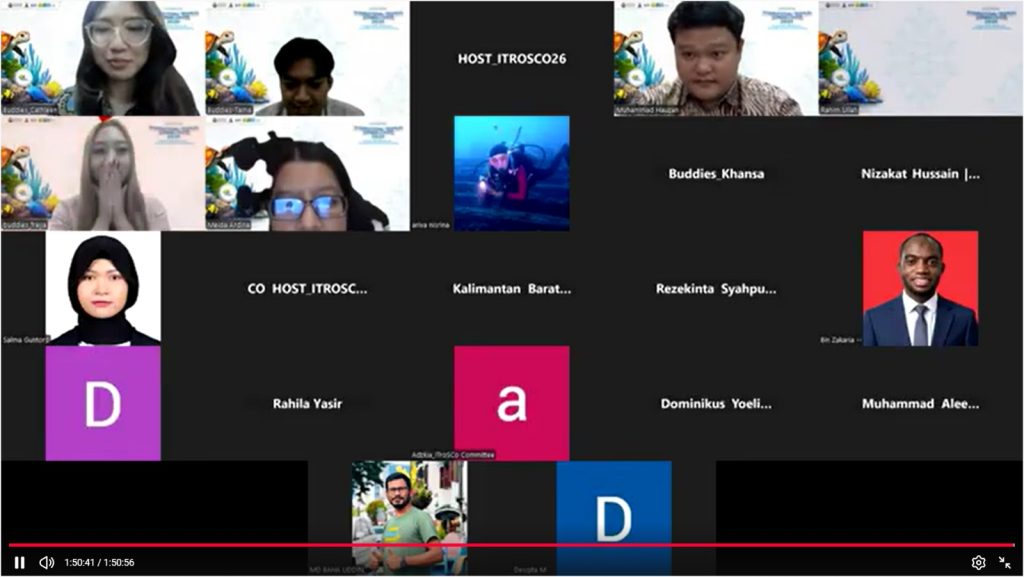
Furthermore, the program highlighted the importance of international cooperation in protecting marine ecosystems. It also encouraged younger generations to take an active role in sustainable coastal development.
The program officially opened on August 27, 2026. Muhammad Hauzan Arifin, M.Si., Chairman of ITroSCo 2026, delivered the opening remarks. Subsequently, Prof. Agus Trianto, S.T., M.Sc., Ph.D., Dean of FPIK UNDIP, officially opened the international summer course.
Throughout the 14-day program, participants attended eleven academic sessions. These sessions covered marine science, fisheries, environmental sustainability, and coastal resilience.
The initial sessions, held from August 27 to September 1, explored coastal sustainability and environmental protection. Participants also discussed marine pollution, microplastic impacts, ocean dynamics, and coastal disaster risks.
Exploring Fisheries Innovation and Blue Carbon Solutions
The subsequent sessions expanded participants’ knowledge of sustainable fisheries, seafood safety, climate mitigation, and technological innovation.
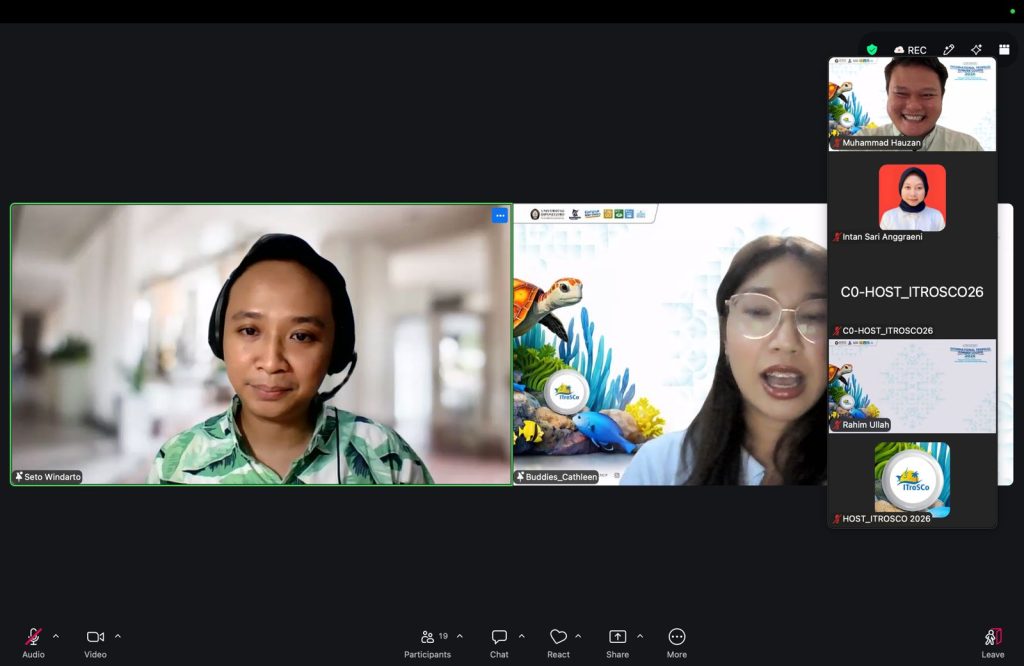
On September 2, Seto Windarto, M.Sc., presented a session entitled “Sustainable Fisheries and Aquaculture for Resilient Coastal Futures.” He discussed the importance of responsible aquatic resource management in supporting resilient coastal communities.
Meanwhile, on September 5, Eko Susanto, Ph.D., delivered a session entitled “Fisheries and Marine Research Innovation.” His presentation highlighted the role of scientific research and technological innovation in addressing challenges across the fisheries and marine sectors.
Other sessions explored several important topics, including:
- Seafood safety and public health.
- Blue carbon ecosystems and climate change mitigation.
- Coastal ecosystem restoration through nature-based solutions.
- Cold chain systems and international seafood trade.
- Microbial applications and emerging technologies for coastal pollution control.
Together, these topics demonstrated the close relationship between environmental protection, food security, and sustainable economic development. They also showed how science and technology can support better management of marine and coastal resources.
Encouraging Active Student Participation and Global Exchange
Beyond academic presentations, student engagement became an important part of ITroSCo 2026. The interactive learning environment encouraged participants to ask questions, exchange ideas, and share perspectives.
Students also discussed environmental challenges based on their respective geographical and academic backgrounds. These interactions created opportunities to understand coastal issues from different international perspectives.
Moreover, cross-cultural discussions helped participants develop broader insights into marine and coastal sustainability. The experience also encouraged critical thinking, communication, and international collaboration.
Through these activities, ITroSCo 2026 demonstrated the value of international academic programs in preparing globally minded graduates. Active student participation also strengthened the connection between scientific knowledge and real-world environmental challenges.
Supporting UNDIP’s Internationalization and Sustainable Development Goals
The implementation of ITroSCo 2026 reflected Universitas Diponegoro’s commitment to internationalizing higher education. Through this program, FPIK UNDIP expanded opportunities for international academic exchange and collaboration.
Furthermore, the program supported the United Nations Sustainable Development Goals (SDGs). Its academic activities aligned particularly with four global development priorities:
- SDG 4 – Quality Education: Expanding access to international learning and academic exchange.
- SDG 13 – Climate Action: Promoting knowledge and awareness of climate change mitigation and adaptation.
- SDG 14 – Life Below Water: Supporting marine ecosystem protection and sustainable fisheries management.
- SDG 17 – Partnerships for the Goals: Strengthening international cooperation through education and research.
These contributions reinforced the importance of interdisciplinary approaches in addressing global environmental challenges. They also highlighted the role of higher education institutions in promoting sustainable development.
Building Future International Academic Collaboration
ITroSCo 2026 concluded on September 9, 2026, with a closing ceremony led by Muhammad Hauzan Arifin, M.Si., Chairman of ITroSCo 2026. The ceremony marked the end of fourteen days of international learning, discussion, and knowledge exchange.
Through ITroSCo 2026, the Faculty of Fisheries and Marine Sciences, Universitas Diponegoro, reaffirmed its commitment to providing international learning opportunities. The program also encouraged active student participation in global scientific discussions.
Furthermore, ITroSCo 2026 is expected to strengthen academic networks and create opportunities for future research collaboration. These efforts will support the development of innovative solutions to emerging challenges in marine and coastal environments.
By bringing together participants from different countries, FPIK UNDIP continues to promote global perspectives, scientific innovation, and collaborative action. These initiatives contribute to the development of resilient coastal communities and sustainable marine resources.