
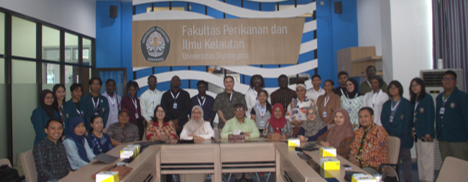
SEMARANG, Indonesia – The Faculty of Fisheries and Marine Science (FPIK), Diponegoro University (UNDIP), strengthened its commitment to international academic engagement through the successful implementation of the Tropical Aquaculture (TropAqua) Summer Camp 2026, hosted by the Aquaculture Study Program from 3–6 August 2026.
Carrying the theme “Shaping the Future of Tropical Aquaculture in a Changing Climate,” the inaugural TropAqua Summer Camp brought together 16 international students from 11 countries: Ghana, Kenya, Sudan, South Sudan, Timor-Leste, Egypt, Myanmar, Kyrgyzstan, Solomon Islands, Vanuatu, and Papua New Guinea.
As the first summer camp hosted by the Aquaculture Study Program, TropAqua represents an important initiative in expanding international engagement within FPIK UNDIP. The program was designed to introduce international students to the diverse dimensions of tropical aquaculture while providing UNDIP students with opportunities to gain international exposure through direct interaction with students from different countries.
Throughout the four-day program, participants took part in a combination of academic, practical, and cultural activities. The academic component covered brackishwater aquaculture, freshwater aquaculture and catfish farming business, and climate change. Participants also joined a fish restocking activity at Jatibarang Reservoir, providing practical experience related to reservoir management.
Beyond the academic program, TropAqua emphasized cultural exchange and intercultural learning. Participants took part in a batik workshop and cultural exchange activities, offering them an opportunity to experience Indonesian culture firsthand. They also participated in activities celebrating Indonesia’s Independence Day through a series of fun and interactive games.
The program also provided valuable international exposure for UNDIP students. Ten undergraduate students from the Aquaculture Study Program were appointed as members of the student committee and buddies for the international participants. Through these roles, students had opportunities to communicate, collaborate, and interact directly with their international peers, while developing broader perspectives and international networks.
From the faculty perspective, programs such as TropAqua contribute to the development of an increasingly international and globally oriented academic environment. Internationalization is not limited to student mobility abroad; meaningful interaction with international students on campus can also provide valuable opportunities for students to develop intercultural communication, collaboration, and global awareness.
For international participants, the program offered an opportunity to explore tropical aquaculture within an Indonesian academic and environmental context. At the same time, the participation of UNDIP students enabled knowledge sharing and cultural interaction that extended the benefits of the program beyond the classroom.
The successful implementation of the first TropAqua Summer Camp is expected to provide a strong foundation for the program’s continued development. The initiative is planned as an annual program, creating opportunities for Aquaculture students to experience an international academic environment and expand their networks internationally. Through TropAqua, the Aquaculture Study Program and FPIK UNDIP continue to foster meaningful connections between academic learning, international collaboration, and intercultural exchange. The program reflects the faculty’s ongoing efforts to prepare students with not only strong academic competencies, but also the global perspectives and collaborative capabilities required to contribute to the future development of fisheries and aquaculture.