
Semarang – The Faculty of Fisheries and Marine Sciences (FPIK), Universitas Diponegoro (UNDIP), continues to expand its global research network through the World Class University (WCU) Program. As part of this initiative, Dr. Dwi Haryanti, S.Kel., M.Sc., a lecturer from the Department of Marine Science, participated in a Staff Exchange Program at National Taiwan University (NTU), Taiwan, from 7–9 June 2026.
Funded by the WCU UNDIP Program, the staff exchange aimed to strengthen research collaboration between FPIK UNDIP and National Taiwan University, one of the world’s leading universities. The program reflects UNDIP’s commitment to enhancing international research partnerships while improving the academic and research capacity of its faculty members.
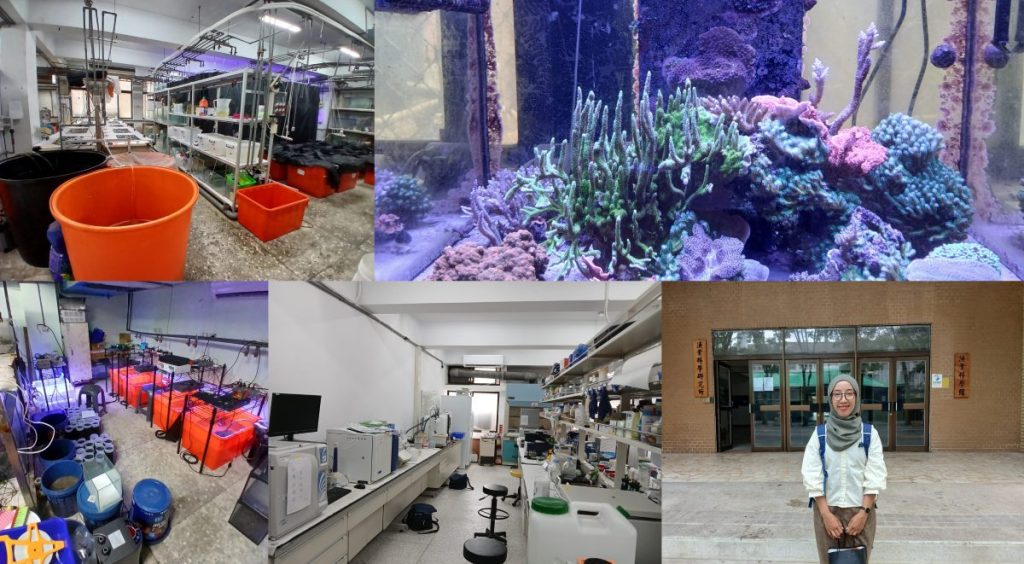
During the visit, Dr. Dwi Haryanti conducted research activities at the Reef Ecology and Microbiology Laboratory, Institute of Fisheries Science, National Taiwan University. She worked closely with Associate Professor Shan-Hua Yang, with whom she has collaborated since 2022 through an International Publication Research (RPI) grant funded by Universitas Diponegoro.
Their collaborative research focuses on coral-killing sponges (CKS), one of the significant biological threats to coral reef ecosystems. The study investigates the prevalence, abundance, diversity, and microbiome composition associated with CKS in the Karimunjawa Islands, Indonesia. Using Next Generation Sequencing (NGS) technology, the research aims to provide a deeper understanding of the interactions between sponges, microbial communities, and coral reef ecosystems.
Throughout the staff exchange, Dr. Dwi participated in laboratory visits, collaborative discussions on future research plans, sequence data analysis and interpretation, and the preparation of a joint scientific manuscript entitled “Prevalence, Abundance, and Microbiome Composition of Competitive and Coral-Killing Sponges in Karimunjawa, Indonesia”, which is being prepared for publication in a reputable international scientific journal.
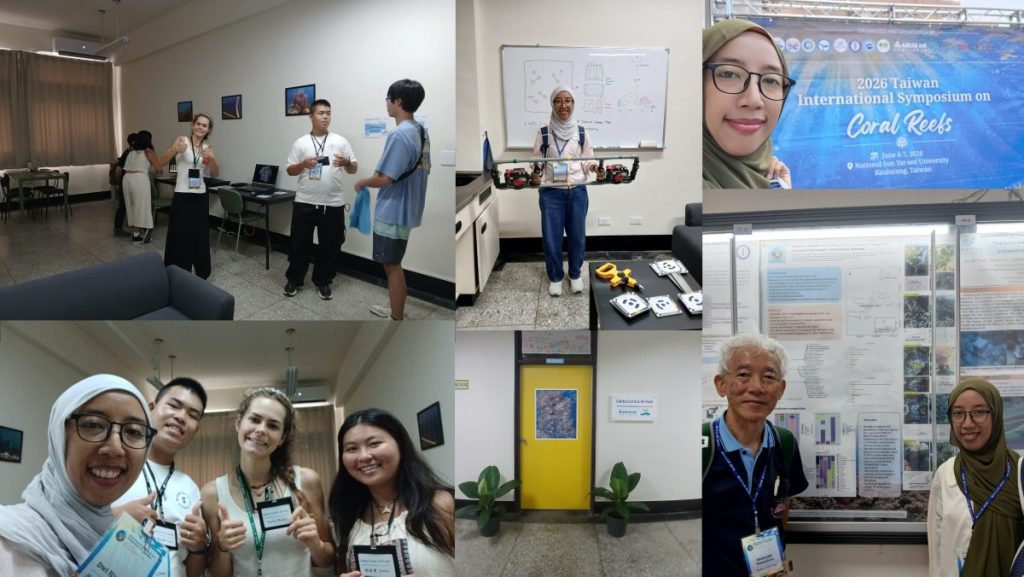
In addition, Dr. Dwi attended the Taiwan International Symposium on Coral Reefs (TISCR) 2026 at National Sun Yat-Sen University, where she presented her research in a poster session and expanded her international research network with scientists from several institutions, including National Chiayi University (Taiwan) and the Swire Institute of Marine Science, The University of Hong Kong.
As part of the symposium activities, she also visited the Large Area Imaging Laboratory at National Sun Yat-Sen University to learn about advanced imaging technologies that support marine ecological research and coral reef conservation.
The Staff Exchange Program is expected to facilitate technology transfer in molecular ecology, particularly in coral reef ecosystem research, while strengthening Indonesia’s research capacity in understanding species interactions, symbiotic relationships within coral reef ecosystems, and the application of cutting-edge molecular techniques in marine ecological studies.
Participation in this international program demonstrates FPIK UNDIP’s commitment to promoting research excellence, expanding global academic partnerships, and increasing international scientific publications. Furthermore, the collaboration is expected to generate innovative research outcomes that contribute to the sustainable management and conservation of marine resources, while supporting Universitas Diponegoro’s vision of becoming a world-class university with a strong global research impact.