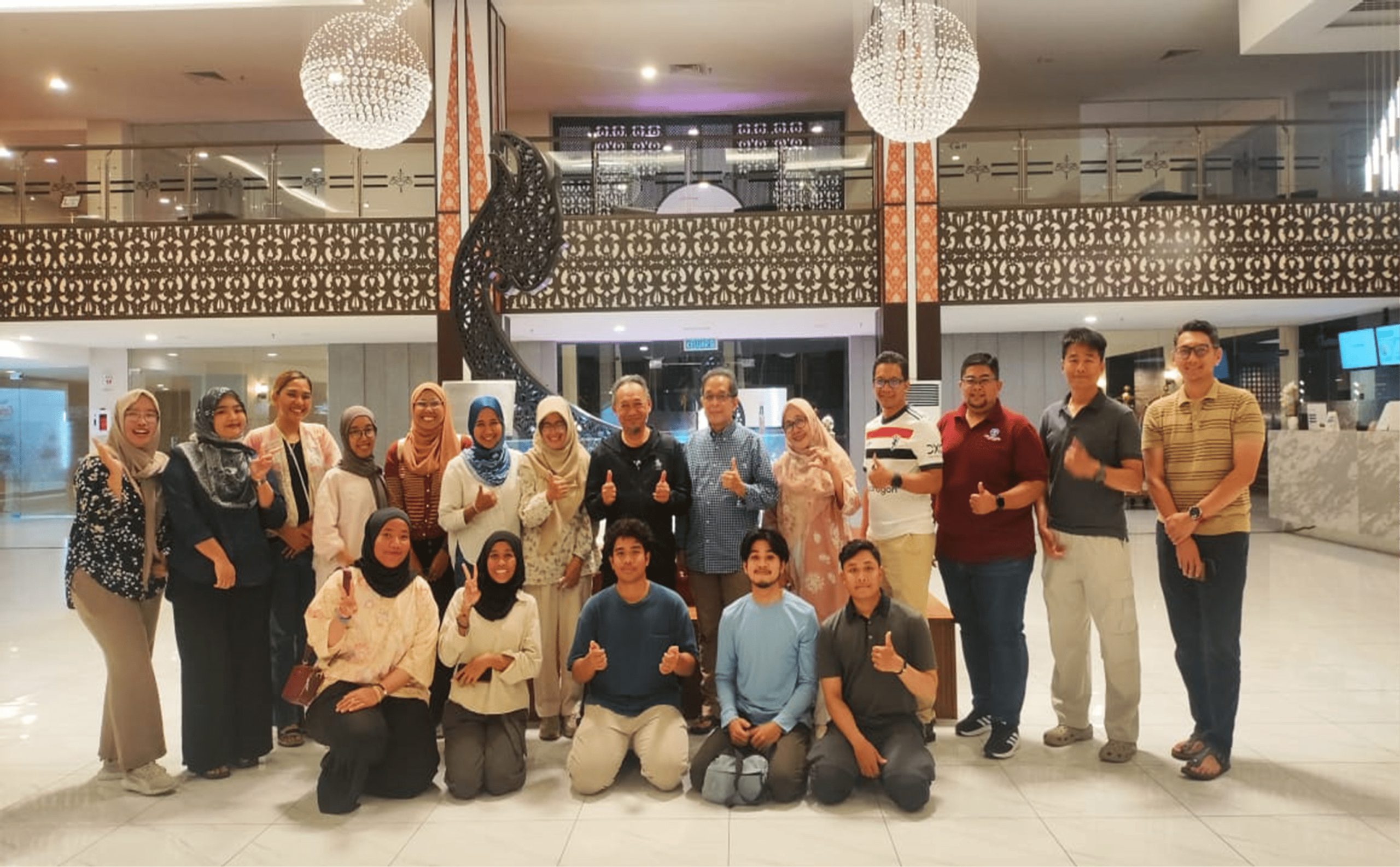
Terengganu, Malaysia, 26 July 2025 – A delegation from the Department of Marine Science, Universitas Diponegoro (UNDIP), participated in the Post-Bleaching Coral Restoration Workshop held on Kapas Island, Terengganu, Malaysia, from 22 to 26 July 2025. The visit was part of a reciprocal academic engagement with Universiti Malaysia Terengganu (UMT), bringing together researchers and students from Indonesia, Malaysia, and Thailand to exchange knowledge and strengthen collaborative efforts in coral reef restoration.
The UNDIP delegation consisted of Prof. Diah Permata Wijayanti, Dr. Dwi Haryanti, Mike Kusuma Wijayanti, S.Si., and Alifalah Tridhia Cahyadi, S.Si. The workshop was attended by researchers from Indonesia and Thailand alongside researchers from the host university. Representatives of Reef Check Malaysia and local community-based reef management groups from Kapas Island also participated, along with postgraduate students from Indonesia and Malaysia.
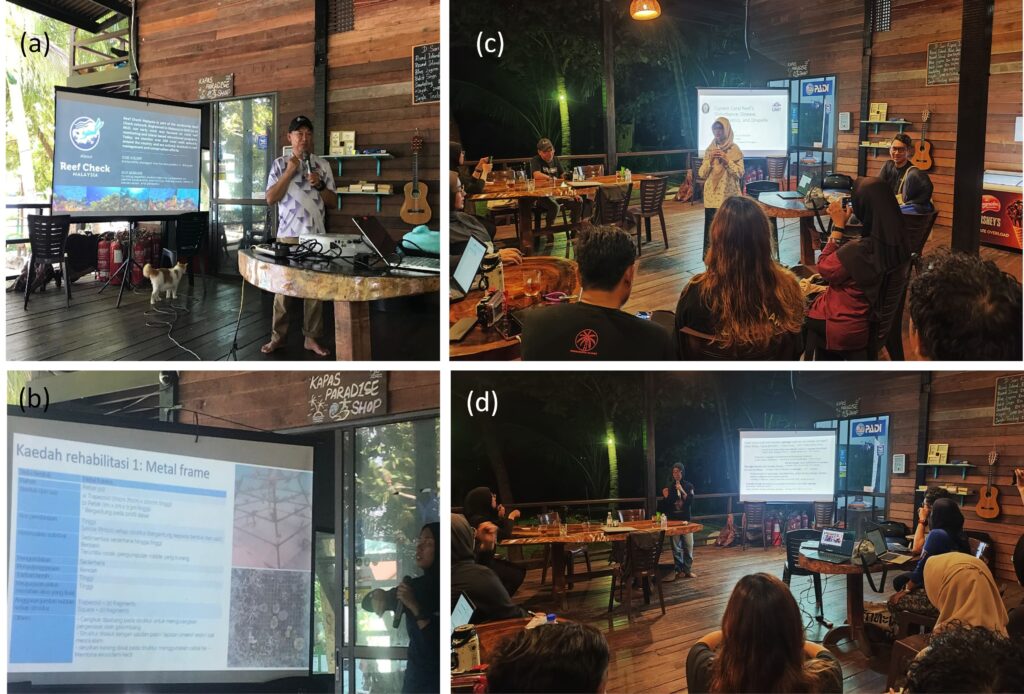
Held on Kapas Island, a popular tourist destination located approximately 15 minutes by boat from Marang Jetty, the workshop opened with remarks from Prof. Zainuddin Bachok, Head of the Institute of Oceanography and Environment (INOS), UMT. In his remarks, Prof. Zainuddin, who is also known as Prof. Din, emphasized the importance of coral reef restoration and long-term monitoring amid the increasing pressures affecting reef ecosystems. He highlighted resilience as a key factor in ensuring the long-term sustainability of coral reefs.
The workshop also featured a presentation by Puteri Asma Megat Yusof from Reef Check Malaysia, who shared experiences from coral reef restoration initiatives on Redang Island. The programs involve local communities, including younger generations, in conservation efforts. Reef Check Malaysia’s four key programs—EcoAction, Science, Advocacy, and Management—are designed to support and accelerate coral reef recovery from various environmental pressures.
The practical component of the workshop began with the installation of iron stakes that would serve as structural supports for PVC pipes used as substrates for coral fragments. A total of 40 iron stakes were installed by postgraduate students participating in the workshop.
The evening session featured presentations from the UNDIP delegation. Prof. Diah Permata Wijayanti presented current threats affecting coral reefs in the Karimunjawa Islands, including coral diseases, microplastic pollution, and outbreaks of Drupella snails. The session continued with a presentation by Dr. Dwi Haryanti, who discussed sponge competition as both a potential threat to coral reefs and an opportunity for reef recovery, drawing on case studies from Karimunjawa and Bali.
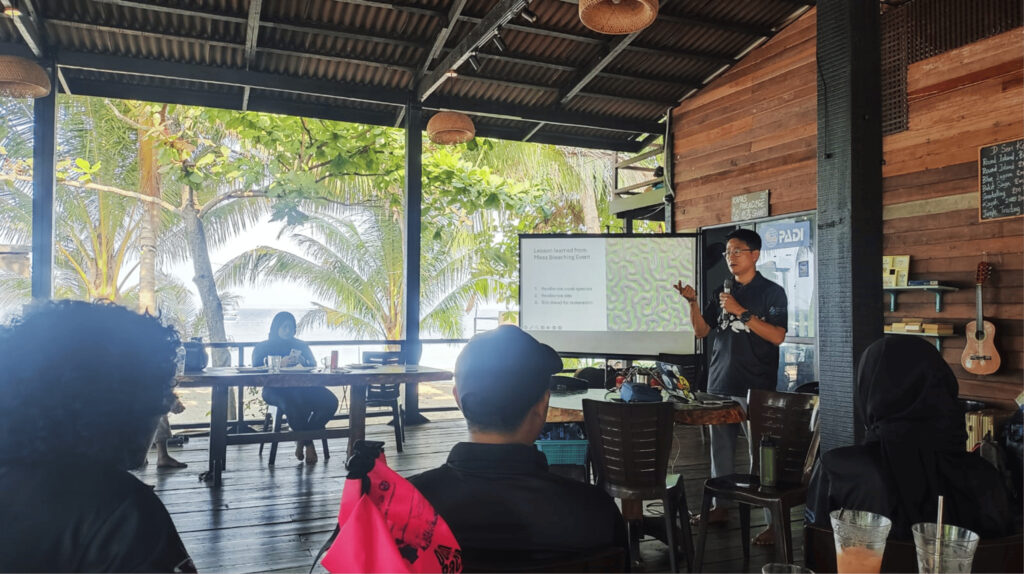
The following morning, Assoc. Prof. Dr. Tan Chun Hong delivered a presentation entitled “Bleached but Not Broken: Restoring Coral Reefs for Future Generations.” The session provided insights into approaches to restoring coral reef ecosystems following bleaching events and highlighted the importance of restoration strategies for maintaining reef ecosystems for future generations.
Following the academic sessions, participants took part in a fun dive in the waters surrounding Kapas Island at a depth of approximately 10 meters. The UNDIP delegation had the opportunity to observe the underwater ecosystem, including coral reefs and a variety of marine organisms such as reef fish, sea cucumbers, and giant clams.
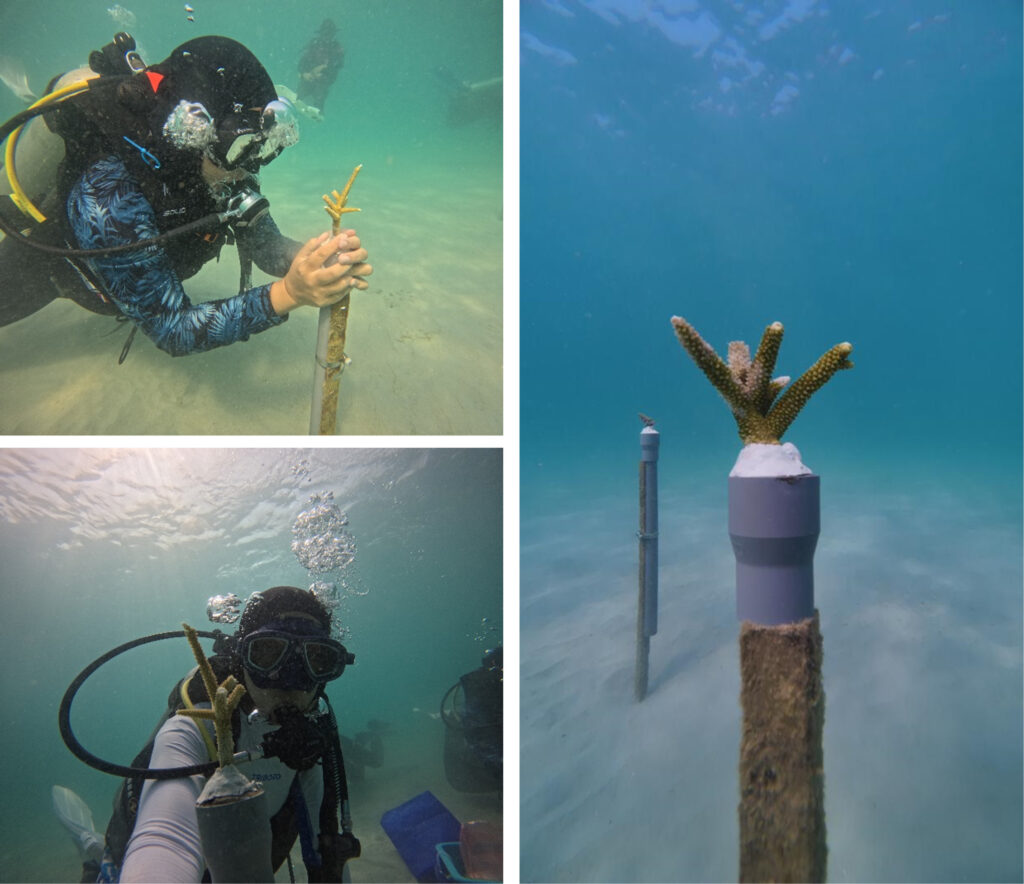
After the dive, participants continued with a coral restoration activity near Kapas Island. Several workshop participants and members of the UNDIP delegation took part in planting coral fragments at a restoration site located approximately five minutes from the island. The location was selected to facilitate more efficient monitoring and maintenance of the transplanted corals in the future.
The coral fragments used in the restoration activity belonged to the genus Acropora. The fragments were attached to modified PVC pipe substrates that had been installed the previous day. An underwater epoxy adhesive was used to secure the coral fragments to the substrates, helping maintain their stability and support their growth on the seafloor.
Through the workshop, the UNDIP delegation gained valuable insights into coral reef restoration practices while strengthening academic and research networks with institutions and conservation organizations in the region. The collaborative activities also highlighted the importance of cross-border cooperation, community involvement, and science-based approaches in strengthening coral reef resilience.