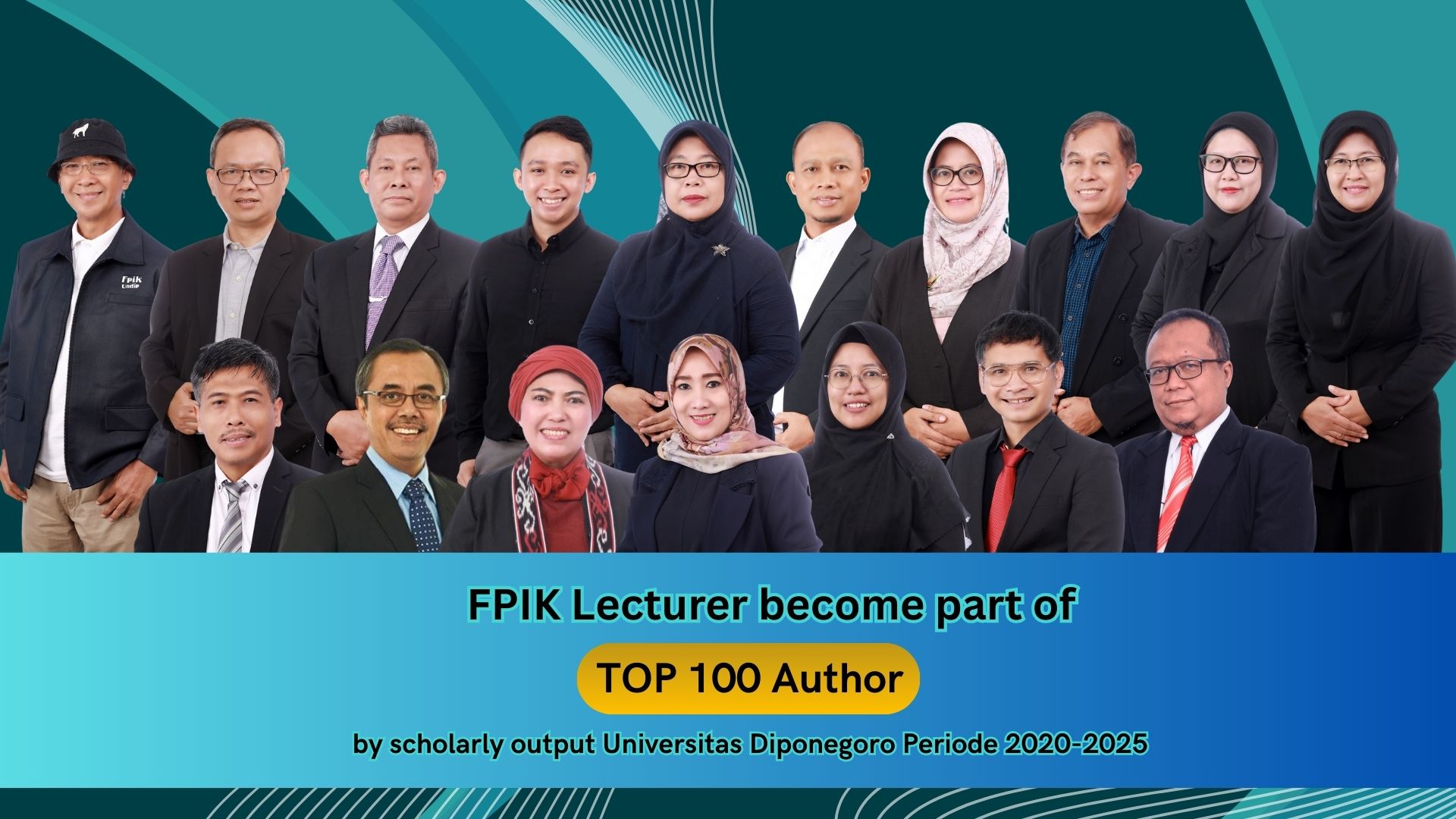
SEMARANG – The Faculty of Fisheries and Marine Sciences, Diponegoro University (FPIK Undip), has once again recorded a proud achievement in the fields of academics and research. A total of 17 FPIK Undip lecturers have been listed among Diponegoro University’s Top 100 Authors for the 2020–2025 period, based on the ranking of reputable international scientific publication performance sourced from the Scopus database.
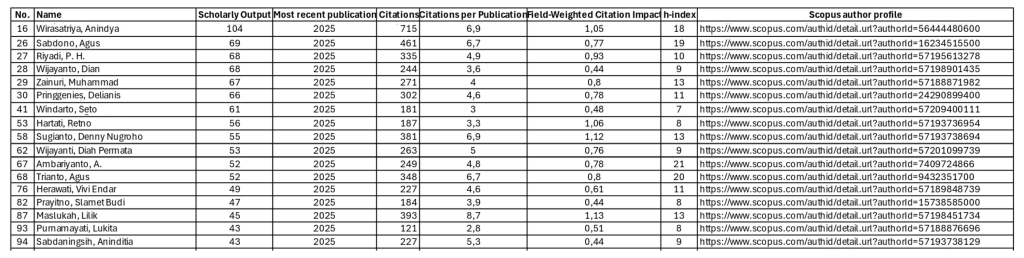
The Top 100 Authors UNDIP ranking is compiled using scholarly output over the past five years as the primary indicator, supported by quality parameters such as total citations, citations per publication, Field-Weighted Citation Impact (FWCI), and h-index. This ranking serves as a strategic instrument for Diponegoro University in objectively and sustainably mapping the research performance of its academic community.
This achievement reflects the significant contribution of FPIK Undip lecturers to the advancement of knowledge in the fields of fisheries, marine sciences, and environmental studies, both at the national and international levels. Consistent publication productivity demonstrates a strong research culture, cross-institutional scientific collaboration, and a firm commitment to fulfilling the Three Pillars of Higher Education, particularly in the area of research.
The following are the 17 FPIK Undip lecturers who have been included in Diponegoro University’s Top 100 Authors:
The inclusion of 17 FPIK Undip lecturers in the Top 100 Authors UNDIP list also serves as an indicator of the high quality of human resources within the faculty. In addition to their roles in education and community service, these lecturers actively produce impactful, relevant, and globally recognized scientific works.
From an institutional perspective, this achievement aligns with FPIK Undip’s strategy to strengthen its research and international publication ecosystem, enhance the quality of research outputs, and expand the faculty’s academic visibility on a global scale. FPIK Undip continuously provides support through the strengthening of research groups, facilitation of international collaborations, and capacity building for lecturers in writing and publishing reputable scientific articles.
FPIK Undip views this achievement not merely as an individual accomplishment, but as a collective success of the faculty in fostering an excellent, competitive academic culture oriented toward meaningful contributions to the sustainable development of the fisheries and marine sectors.