
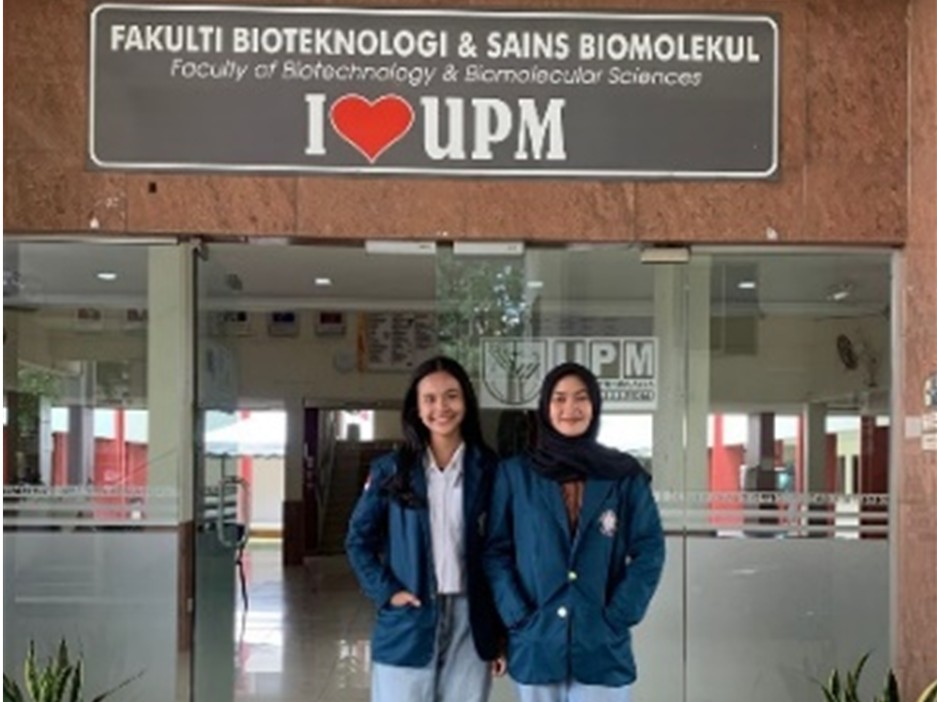
UNDIP, Semarang – Fellycita Marshanda Krisdhiarto and Ghaida Fatimatul Zahra Mustofa, undergraduate students of the Aquatic Resources Management Study Program, Faculty of Fisheries and Marine Science, Diponegoro University, Semarang, have successfully completed an international research internship under Diponegoro University’s MBKM-based Student Go International Program. The research internship was conducted for one month in collaboration with international partners from the Faculty of Biotechnology and Biomolecular Sciences, Universiti Putra Malaysia (UPM), Serdang, Selangor, Malaysia.
(Photo: Internship Team Documentation)
Supervised by Dr. Diah Ayuningrum, S.Pd., M.Si., a lecturer from MSP FPIK Undip, Fellycita and Ghaida conducted research on microplastic-degrading enzymes found in symbiotic bacteria of tunicates. This internship is part of a World Class University Research Project funded by LPPM Undip, titled “Production of Halophilic Microplastic-Degrading Enzymes from Ascidian Symbionts in Karimunjawa for Sustainable Aquatic Management.” The Principal Investigator is Dr. Diah, in collaboration with Prof. Mohd Yunus Bin Abd Shukor, Ph.D, from the Department of Biochemistry, Faculty of Biotechnology and Biomolecular Sciences, UPM. The enzyme activity assays were carried out at the Bioremediation, Biomonitoring, and Ecotoxicology (BBE) Laboratory, Department of Biochemistry, Faculty of Biotechnology and Biomolecular Sciences, UPM.
The microplastic research stems from growing concerns over the unresolved and increasingly alarming plastic waste issue. The widespread perception of the ocean as a “giant dumping site” has worsened marine pollution caused by plastic waste. Microplastics are extremely difficult to decompose in marine ecosystems and pose threats to marine life, such as causing the death of corals, sea turtles, small fish, and other flora and fauna. Dr. Diah Ayuningrum explained that preventing plastic waste from entering marine ecosystems due to human activity is not sufficient; additional efforts are needed, such as utilizing bacteria to degrade microplastics.
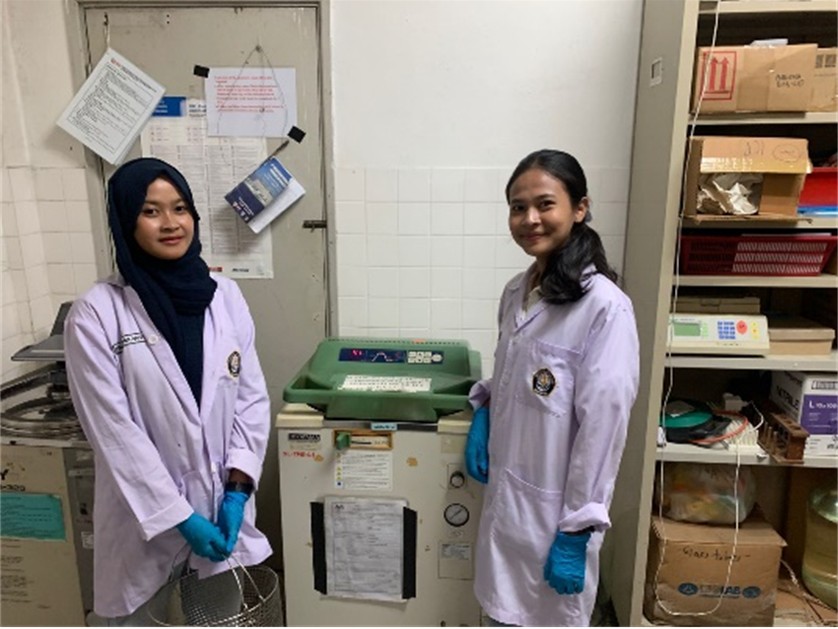
(Photo: Internship Team Documentation)
“The bacteria with potential as microplastic degraders were obtained from symbiotic bacteria in Ascidiacea, belonging to the class Tunicata. Ascidian organisms were chosen because they are still underexplored and not widely utilized. Various international studies have demonstrated the diversity of bioactive compounds and enzymes present in these tunicates,” said Dr. Diah Ayuningrum.
The tests were conducted by culturing bacterial isolates in liquid media supplemented with Polyethylene Terephthalate (PET), making the target enzyme a microplastic-degrading enzyme known as Polyethylene Terephthalatase (PETase). Laboratory results revealed that several symbiotic Ascidian bacterial samples exhibited strong potential to degrade microplastics, as indicated by their enzymatic activity. This finding offers new hope for controlling microplastic pollutants in aquatic environments.
This research-based internship program provides students with broader academic experiences and directly enhances their competence to compete globally in future career paths. It is hoped that the program will continue to expand and support more students from various study programs in developing their academic potential and international networks.