
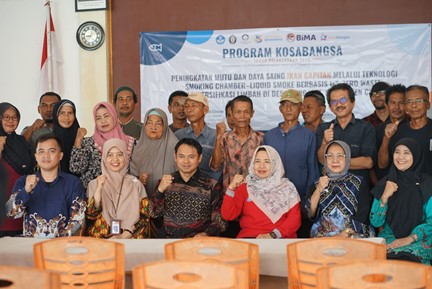
Cilacap, Indonesia – The Faculty of Fisheries and Marine Science at Universitas Diponegoro (FPIK UNDIP) is collaborating with Cilacap State Polytechnic (PNC) through the Kosabangsa 2026 Program. This program aims to improve the quality and competitiveness of local fish products. The socialization and mentoring activities took place at the Multipurpose Hall of Menganti Village, Kesugihan District, Cilacap Regency, on Friday, October 16, 2026.
The program carries the theme “Improving the Quality and Competitiveness of Gapitan Fish through IoT-Based Smoking Chamber Technology, Liquid Smoke, Zero Waste, and Waste Diversification in Menganti Village, Cilacap Regency.” The event involved village officials, local community groups, and academic representatives from FPIK UNDIP and PNC.
Prof. Dr. Ir. Fronthea Swastawati, M.Sc., Head of the FPIK UNDIP Mentoring Team, emphasized the importance of cooperation between universities and local communities. She explained that universities play an important role in sharing knowledge and introducing appropriate technologies. Through this collaboration, local communities can improve their fisheries businesses.
Meanwhile, Ir. Riyadi Purwanto, S.T., M.Eng., Head of the PNC Implementation Team, and the Head of Menganti Village also welcomed the program. They expressed hope that the initiative would help develop the village’s local fisheries potential.
Kosabangsa 2026 Introduces Liquid Smoke Technology
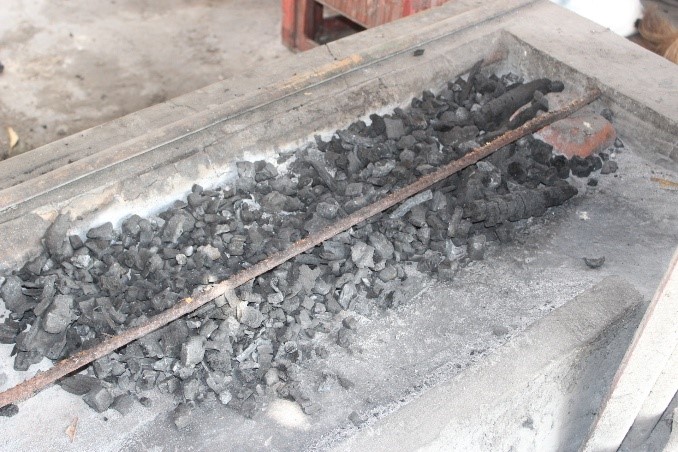
The program continued with a presentation by Prof. Dr. Ir. Fronthea Swastawati, M.Sc. She introduced smoking chamber technology that uses liquid smoke to process gapitan fish, a traditional local fish product.
This technology aims to improve product hygiene and quality. In addition, a more controlled smoking process is expected to increase the competitiveness of traditional fish products. It may also help local producers achieve higher market value.
The program also introduces technology based on the Internet of Things (IoT). This technology supports efforts to improve the control and efficiency of the fish-smoking process.
Turning Fish Waste into Feed through a Zero-Waste Approach
In addition to improving product quality, the Kosabangsa 2026 Program promotes a zero-waste approach. This topic was presented by Ima Wijayanti, S.Pi., M.Si., Ph.D., an UNDIP expert in fisheries waste utilization.
She explained how fish-processing waste can be turned into fish feed pellets. As a result, materials that were previously underused can become valuable products. This approach also creates opportunities for local communities to gain additional value from fish-processing activities.
Furthermore, waste utilization is expected to help reduce fish feed costs. It also supports more environmentally friendly and sustainable fisheries businesses.
After the presentations, participants joined an interactive discussion and question-and-answer session. The activity involved two local partner groups. The first was the Rawawuni Fish Cage Aquaculture Group. The second was Mino Barokah, a group of grilled-fish vendors and processors.
Through these discussions, participants shared their needs and challenges. Their feedback will help the teams develop solutions that match local conditions.
FPIK UNDIP and PNC Visit Local Partner Sites
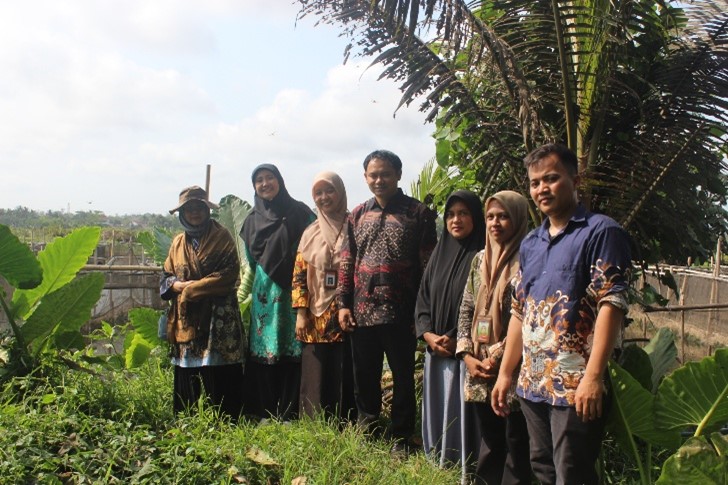
After a break for lunch and Friday prayers, the teams continued with field visits. Representatives from the FPIK UNDIP Mentoring Team and the PNC Implementation Team visited both partner locations.
First, the team visited Mino Barokah’s fish-processing site in Rawawuni Hamlet. There, they observed the traditional fish-smoking process. They also discussed plans to install an IoT-based smoking chamber.
Next, the team visited the fish cage aquaculture site. The visit aimed to assess the group’s current farming conditions. The team also identified the need for locally produced fish feed made from fish-processing waste.
These visits allowed the teams to better understand each partner’s situation and needs. Therefore, the findings are expected to help ensure that the proposed technologies are suitable for local conditions.
Kosabangsa 2026 Supports Sustainable Fisheries
Through the Kosabangsa 2026 Program, FPIK UNDIP and PNC aim to improve product quality and increase the efficiency of local fisheries businesses. The program combines fish-smoking technology, liquid smoke, and waste processing to produce fish feed pellets.
Moreover, this collaboration is expected to create new business opportunities for the people of Menganti Village. Better use of local fisheries resources may also increase product value and support household incomes.
With support from universities and the application of appropriate technology, local communities are expected to develop more productive fisheries businesses. Ultimately, the program aims to strengthen the competitiveness of local products while promoting environmentally responsible and sustainable fisheries.