
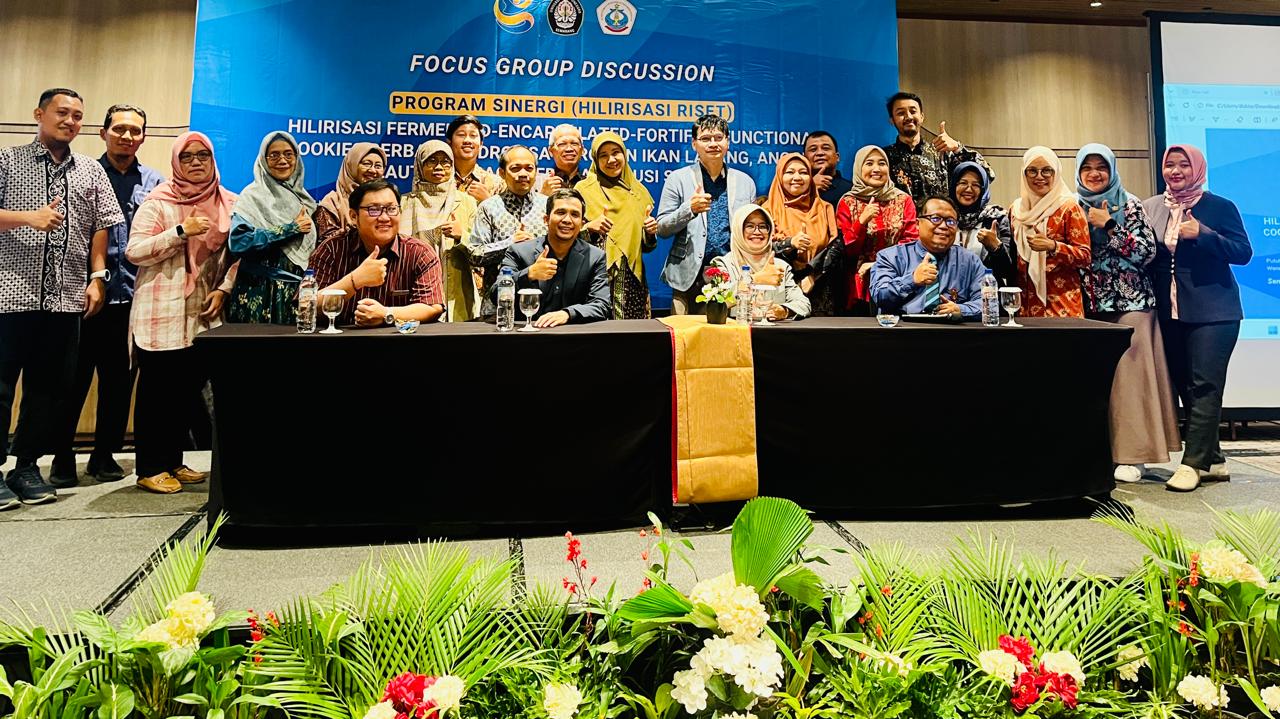
Semarang, August 19, 2026 – The SINERGI Downstreaming Research Team of the Faculty of Fisheries and Marine Science, Universitas Diponegoro (FPIK UNDIP), held a Focus Group Discussion (FGD) on the Downstreaming of Functional Food Innovation with academics, industry partners, and stakeholders. The activity aimed to strengthen collaboration in disseminating research outcomes developed by the Universitas Diponegoro academic community to the wider public, particularly functional cookies made from local food ingredients and designed to help prevent stunting.
The innovation is the result of research led by Dr. Putut Har Riyadi, S.Pi., M.Si., with Dr. Nuryanto, S.Gz., M.Gizi., from Universitas Diponegoro, and Dr. Wendy Alexander Tanod, S.Kel., M.Si., Frets Jonas Rieuwpassa, S.Pi., M.Si., and Eko Cahyono, S.Pi., M.Si., from Politeknik Negeri Nusa Utara (POLNUSTAR), as research team members.
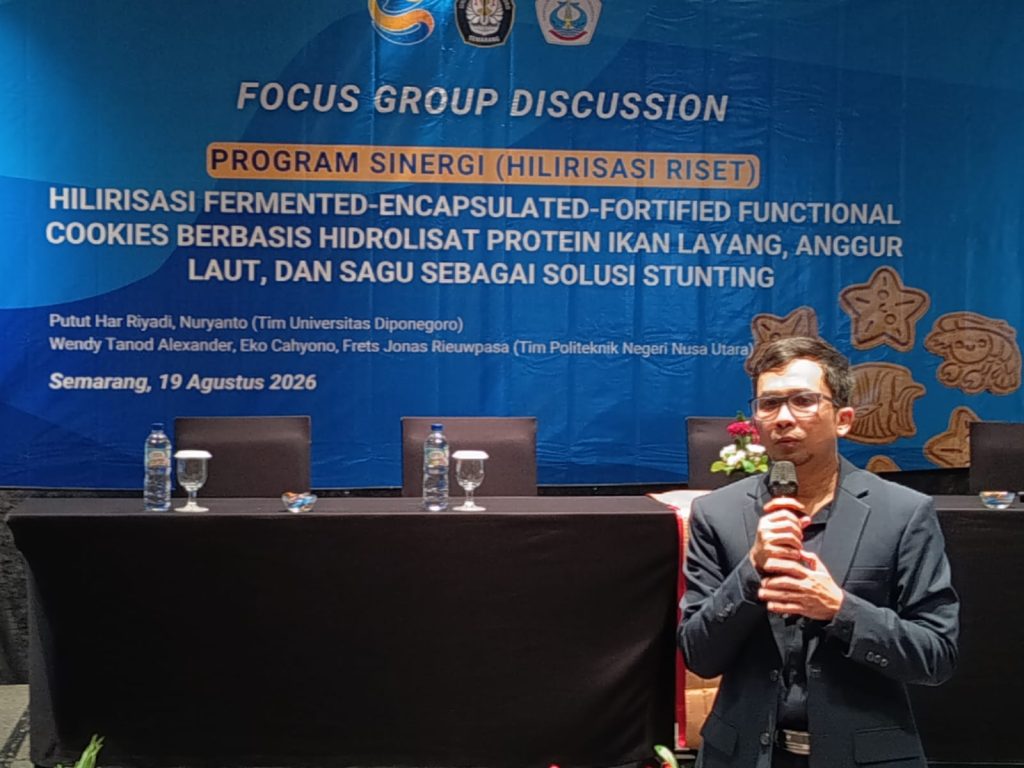
The SINERGI research project, entitled “Downstreaming of Fermented-Encapsulated-Fortified Functional Cookies Based on Indian Scad Fish Protein Hydrolysate, Sea Grapes, and Sago as a Solution to Stunting,” was presented during the FGD, which was held at Hotel Aruss Semarang on Wednesday, August 19, 2026. The event was attended by academic representatives from FPIK UNDIP and POLNUSTAR, as well as industry partners.
In her remarks representing the Dean of FPIK UNDIP, Vice Dean for Academic and Student Affairs Prof. Dr. Ir. Diah Permata Wijayanti, M.Sc., emphasized that university research must address real challenges in society through cross-sectoral collaboration.
“The process of developing knowledge at the university must ultimately result in tangible benefits, and this functional food innovation is evidence of UNDIP’s commitment as a university with integrity and excellence,” said Prof. Diah.
She further explained that, as a research university, Universitas Diponegoro continues to encourage the development of research outcomes beyond scientific publications and patents. Research innovations are expected to be commercially produced and reach communities, particularly areas with high stunting prevalence, especially in Eastern Indonesia.
During the FGD, the research team presented the development of Fermented-Encapsulated-Fortified Functional Cookies made from Indian scad fish protein hydrolysate, sea grapes, and sago. Dr. Putut Har Riyadi, S.Pi., M.Si., the Principal Investigator, explained that the innovation utilizes Indonesia’s local biological resources to reduce dependence on imported raw materials for complementary foods, such as wheat flour and milk powder.
Dr. Putut explained that stunting poses a serious threat to children’s growth and development due to chronic nutritional deficiencies and inadequate intake of micronutrients.
“This functional cookie innovation has been specially formulated as an alternative supplementary food to help prevent stunting. It is high in protein, rich in fiber and minerals, and has a low Glycemic Index (GI),” he explained.
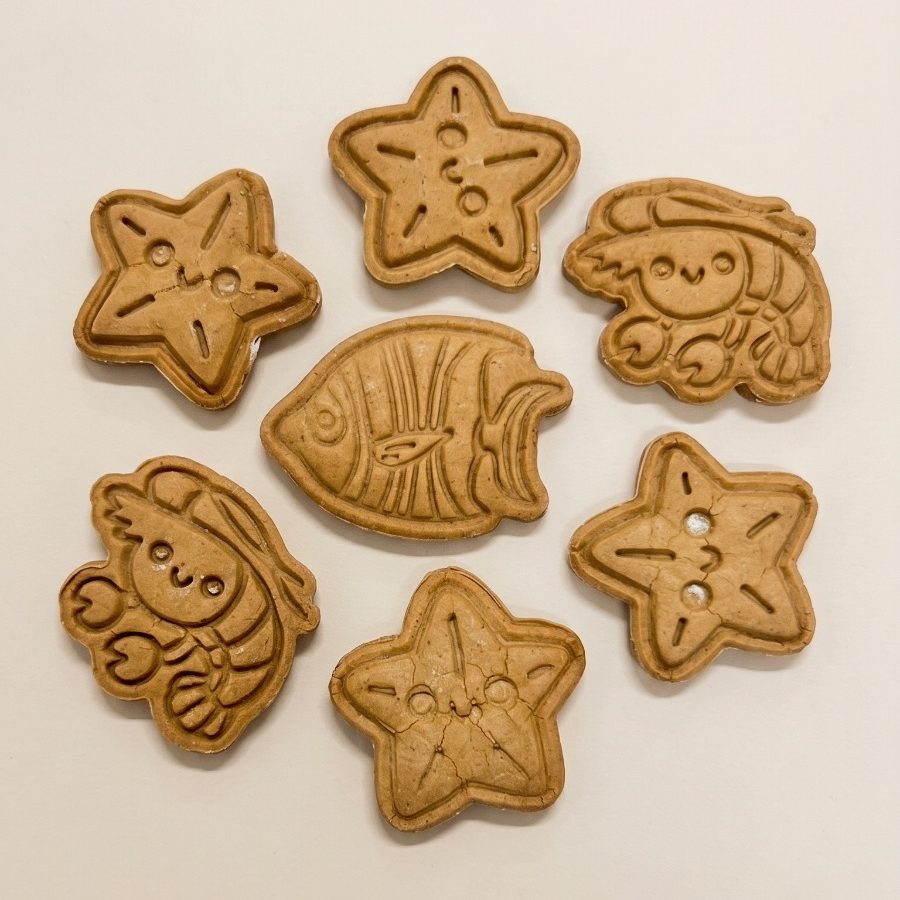
The product combines Indian scad fish protein hydrolysate as a source of essential amino acids, sea grapes as a source of fiber and minerals, and modified sago as a source of healthy carbohydrates. The main advantages of the product include the application of fermentation technology to reduce the fishy odor and improve protein quality, as well as encapsulation technology to preserve nutritional content, particularly essential amino acids, during the baking process.
Dr. Putut added that laboratory testing of the best formulation showed a protein content of 5–8% and a moisture content of 1.52%. These results comply with SNI 2973:2022 and Minister of Health Regulation No. 51 of 2016.
From a business feasibility perspective, the product has strong potential for sustainable production and marketing through collaboration with industry partners, namely Koperasi Jasa Marlin Space Nusantara and UMKM Dapur Leora Pizza.
Currently, the research has entered the in vivo (preclinical) testing stage, while the team is also working on the SNI standardization and licensing process before the product can be widely utilized by the public.
The product has also obtained Halal Certification No. ID33110079473370826, based on the Halal Product Determination Decree of the Indonesian Ulema Council (Majelis Ulama Indonesia/MUI) No. MUI-LPPOM-33A00160160010826, dated August 7, 2026.
Through the FGD, Universitas Diponegoro seeks to strengthen sustainable collaboration among academia, industry, and government. This synergy is expected to accelerate the dissemination of functional food innovations for stunting prevention, enabling them to reach broader communities and generate meaningful social and economic impacts.